Why Your Door Won't Close Properly (And How to Fix It)
A door that sticks, drags or refuses to latch is one of those problems that starts as a small annoyance and quietly becomes a daily frustration. Here is what is actually going on and what you can do about it.
You push the door and it catches on the frame. Or it closes fine but the latch does not line up anymore. Maybe it swings open on its own the moment you let go. Whatever version of the problem you are dealing with a door not closing properly is almost never just about the door itself. Something around it has shifted and the door is just the thing showing you the symptoms.
The fix could take ten minutes or it could point to something more serious underneath. This guide helps you figure out which situation you are in so you are not wasting time on the wrong solution.
📍 Based in the Twin Cities? Our team handles all kinds of door issues around the metro. See what we offer on our Door Repair Minneapolis
The Most Common Reasons a Door Stops Closing Right
Most door alignment problems trace back to one of four causes. Understanding which one you have makes everything else faster.
Loose or Worn Hinges
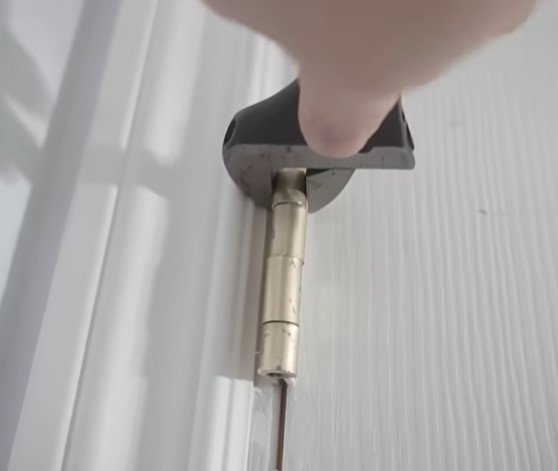
This is the most common cause and thankfully one of the easiest to fix. Over years of opening and closing the screws that hold hinges to the door frame can work themselves loose. When that happens the door sags slightly and the latch side no longer lines up with the strike plate. Look at the top hinge first. A gap between the hinge and the frame or a hinge that visibly wobbles tells you exactly where the problem started.
Wood Swelling from Moisture or Humidity
In Minnesota this one shows up every single year. Wood expands when it absorbs moisture and contracts in dry winter air. A door that closes fine in February might stick every morning in July because the wood has taken on humidity from rain and warm air. If your door only sticks during certain seasons or right after it rains moisture is almost certainly the reason.
The Strike Plate Has Shifted
The strike plate is the small metal piece on the door frame that the latch clicks into. If it shifts even a fraction of an inch the latch will not seat properly and the door will feel like it is not quite catching. You might hear a scraping sound or find yourself having to lift the handle to get the door to latch. This is often a sign that the frame itself has moved slightly over time.
Foundation Movement or Structural Settling
Houses move. It happens slowly and in most cases it is completely normal. But when a home settles unevenly the door frames can shift out of square. A door that was installed perfectly plumb can end up slightly off after years of seasonal movement. This is the cause that warrants the most attention because the door is not really the problem here — the structure around it is.
A door that sticks or drags is almost never just about the door itself. Something around it has shifted and the door is showing you the symptoms.
Quick Fixes You Can Try Right Now
Before calling anyone there are a few things worth trying yourself. These will solve the problem in a lot of cases and take no more than an hour.
1. Tighten every hinge screw
Open the door fully and tighten each screw in each hinge with a screwdriver. If a screw spins without catching the hole has been stripped. Fill the hole with a wooden toothpick and a little wood glue and let it dry before reinserting the screw. This sounds too simple to work but it fixes a surprising number of sticking doors permanently.
2. Check where the door is actually making contact
Close the door slowly and watch exactly where it binds or drags. Mark the spot with a pencil. This tells you whether the problem is at the top corner, the latch side, or along the bottom edge. Each location points to a different cause and a different fix.
3. Sand or plane the sticking edge
If moisture is causing the wood to swell you can remove a small amount of material from the edge that is rubbing. For light contact a sheet of sandpaper works fine. For more significant sticking a hand plane gives you better control. Remove a little at a time and test the door as you go. Removing too much is easy to do and hard to undo.
4. Adjust or reposition the strike plate
If the latch is not catching cleanly unscrew the strike plate and look at the marks the latch is leaving. If the latch is hitting high or low you can file out the strike plate opening slightly or move the plate to meet the latch where it actually falls. A chisel and a few minutes is usually all it takes.
5. Use a longer screw in the top hinge
If the door sags toward the latch side removing one short screw from the top hinge and replacing it with a 3 inch screw that reaches into the wall stud can pull the whole frame back into alignment. This is one of the more effective fixes for a sagging door and costs almost nothing to try.
When the Problem Is Structural
Most door alignment fixes are straightforward. But there are situations where a sticking door is telling you something bigger is happening with the house itself.
If multiple doors in your home have started sticking around the same time that is a signal worth taking seriously. One door shifting is usually just wear or humidity. Several doors shifting at once often points to foundation movement or a structural issue in the framing.
Look at the door frame itself. If you can see that the frame is visibly out of square — meaning the gap around the door is wider at the top than the bottom or noticeably uneven on one side — that is not something a hinge adjustment will fix. The frame has moved and until the movement stops and the underlying cause is addressed any repair you make to the door will be temporary.
Diagonal cracks running from the corners of door frames or window frames are another sign to watch for. Drywall cracks directly above a door opening that appeared around the same time the door started sticking deserve a closer look before you assume it is just an old house settling.
Signs This Is More Than a Door Problem
- More than one door or window in the home has started sticking recently
- The door frame looks visibly twisted or out of square
- Cracks have appeared in the drywall near the door opening
- The floor near the door feels soft or uneven underfoot
- The door has gotten significantly worse in a short period of time
- You can see daylight or feel a draft around the door frame that was not there before
None of these things automatically mean a major structural problem. Houses in Minneapolis deal with freeze and thaw cycles every single year and some degree of movement is normal. But these are the signs that tell you to get a professional set of eyes on it before assuming the door is the whole story.
When to Call a Handyman or Professional
If you have tightened the hinges, checked the strike plate and sanded the sticking edge and the door is still not right it is time to bring someone in. A expert handyman can diagnose a door alignment problem in a few minutes because they have seen every version of it before.
There are also situations where the repair itself requires tools or skills that most people do not have at home. Replacing a door frame that has rotted at the bottom from water damage. Rehinging a heavy exterior door that has pulled away from the framing. Fixing a door that has swelled so much the only real fix is planing it down significantly and refinishing the edge. These are jobs that are worth having done properly rather than patching together.
Exterior doors especially deserve proper attention. A door that does not close and seal correctly in a Minneapolis winter is not just annoying — it is pushing up your heating bill every single month and putting stress on your weatherstripping and threshold seal that will wear them out faster.
If the door is in a rental property or you are preparing a home to sell a professional repair also matters for liability and inspection reasons. A door that will not latch properly or close fully is something a home inspector will flag and buyers will notice.
Door Still Not Closing Right?
We diagnose and fix door problems the right way the first time. Serving homeowners throughout Minneapolis and the surrounding metro area.